



As artificial intelligence (AI) continues to evolve, its influence on the workplace is becoming increasingly profound. AI is no longer just a tool for automating tedious tasks; it is a powerful catalyst for transforming career development and learning within organizations. Companies that leverage AI to enhance employee growth, engagement, and organizational success are positioning themselves to thrive in the future of work. This article explores how AI can drive career development and why it’s essential for companies to adopt a holistic approach that prioritizes continuous learning and employee well-being.
According to LinkedIn’s 2024 Workplace Learning Report, 80% of employees express a desire to learn how to use AI in their professions. This surge in interest underscores the critical need for companies to integrate AI-driven career development initiatives. As AI automates routine tasks, the demand for higher-level skills such as creativity, critical thinking, and domain expertise will grow. Companies must respond by equipping their workforce with the necessary skills to navigate and excel in an AI-enhanced environment.
Personalize Learning, Mentorship, and Career Coaching with AI
AI can revolutionize career development by offering personalized learning paths, enhancing mentorship programs, and providing targeted career coaching. Companies like Atrium emphasize personalized career pathing, ensuring that employees receive learning opportunities aligned with their individual goals and the needs of the organization. AI facilitates this by analyzing career aspirations and performance data to offer tailored recommendations, making career development more targeted and effective.
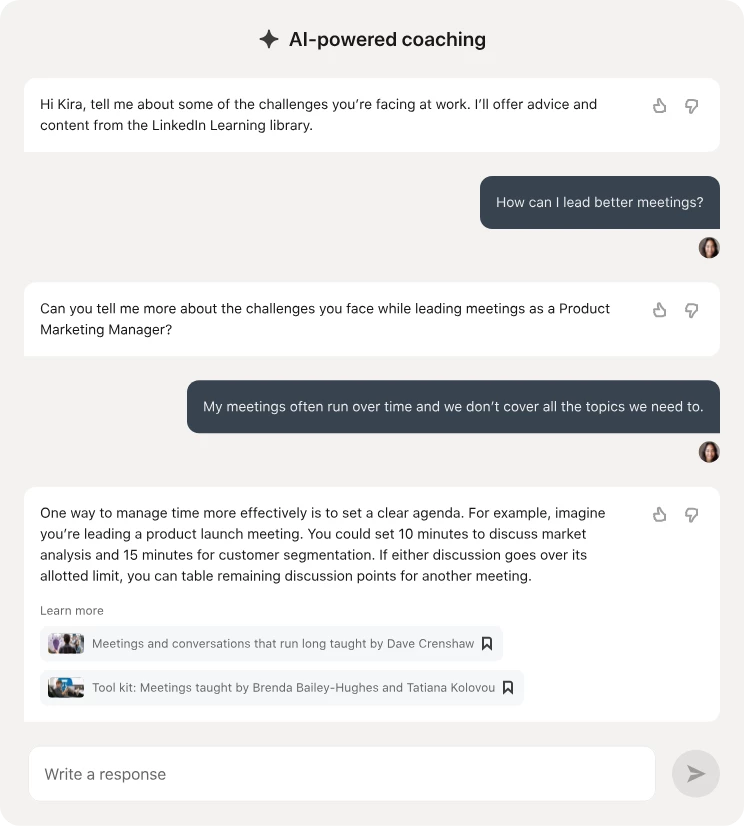
Tools like LinkedIn Learning's AI powered coaching exemplify how AI can provide real-time, customized advice and course suggestions based on user queries and feedback. This technology adjusts guidance according to job roles and specific challenges, enhancing the relevance and impact of learning. Additionally, AI-driven mentorship programs connect experienced employees with those seeking guidance, fostering knowledge transfer and creating a collaborative learning environment. By integrating AI into learning, mentorship, and career coaching, companies can align individual and organizational objectives, driving both employee success and overall achievement.
Investing in Formal Training and Experiential Learning Opportunities
To fully harness the potential of AI in career development, companies must invest in both formal training and experiential learning opportunities. Allocating resources such as stipends or designated learning hours for employees to participate in educational programs ensures continuous learning without overburdening their regular work responsibilities, preventing burnout. Formal training is crucial for employees to acquire new skills and stay aligned with their career goals, with AI-powered career coaching tools providing personalized guidance, data-driven insights, and targeted recommendations that make career development more efficient and impactful.
Simultaneously, experiential learning remains a key component of effective career development, and AI plays a vital role in enhancing these opportunities. AI-powered skill matching can recommend stretch assignments that align with an employee’s goals, while project management tools and performance analytics offer real-time feedback and assess outcomes, guiding future development efforts. In job rotation programs, AI can automate scheduling and personalize rotation paths, ensuring employees gain the most relevant experience. AI also enhances job shadowing by matching employees with suitable colleagues or creating virtual shadowing experiences through VR and AR, with learning analytics tracking their progress.
For returnships, AI can design customized onboarding programs, connect returnees with mentors, and monitor their progress to ensure a smooth transition. In cross-training, AI identifies skill gaps and offers personalized training materials, tracking employee performance in their new roles. By integrating formal training with these AI-enhanced experiential learning opportunities, companies can create a comprehensive and effective development strategy that fosters a diverse skill set and prepares employees to adapt to evolving job demands.
Building a Continuous Learning Culture
A continuous learning culture is essential for companies aiming to leverage AI effectively. Acknowledging and rewarding employees for their learning and development efforts can significantly boost motivation and engagement. Implementing a robust internal mobility program and recognizing skills development during performance reviews can incentivize employees to prioritize their professional growth. According to LinkedIn’s 2024 Workplace Learning Report, companies with a robust learning culture see higher retention rates and greater internal mobility.
Building this culture involves fostering a mindset of lifelong learning and adapting to new technological advancements. For example, Christopher Lind, Chief Learning Officer at ChenMed, emphasizes focusing on outcomes rather than dictating how employees should achieve them. By setting clear, measurable targets and allowing individuals the autonomy to create their unique pathways, ChenMed invites employees to take ownership of their learning journey. Similarly, Dr. Terri Horton, an HR consultant at FuturePath, advocates for personalized learning that resonates with employees' aspirations, encouraging leaders to have meaningful conversations that spark enthusiasm for growth.
Companies that frame learning as an investment in the future, as highlighted by Naphtali Bryant of the Lucas Museum of Narrative Art, and that ensure psychological safety, as Lori Niles-Hofmann of NilesNolen advises, create environments where employees feel supported even when they fail. This fosters deep and meaningful learning experiences.
Leadership also plays a crucial role in fostering career development initiatives and a learning culture. When senior employees actively participate in L&D initiatives, it sets a positive example for the entire organization. Programs like Gitlab’s CEO Shadow Program, where employees can observe the CEO’s daily activities, highlight the importance of leadership involvement in career development.
The Importance of Soft Skills for Career Advancement
While hard skills are crucial for technical proficiency, soft skills are equally vital for career advancement. According to LinkedIn data, employees who possess both hard and soft skills are promoted faster than those who focus solely on technical expertise. To stay competitive and enhance career growth, companies should integrate soft skills training into their development programs. Essential soft skills include communication, teamwork, and problem-solving, which complement technical abilities and facilitate faster promotions.
To help employees develop these key soft skills, companies can offer resources such as LinkedIn Learning's course on Master In-Demand Professional Soft Skills, which provides valuable insights and practical strategies for thriving in today’s job market.
The Future of Work: A Continuous Learning Culture
The 2024 Workplace Learning Report emphasizes that building a continuous learning culture is essential for harnessing the potential of AI. Companies with strong learning cultures report higher retention rates, greater internal mobility, and more effective talent development strategies. For instance, organizations with robust L&D programs see a 23% increase in internal mobility and a 57% higher retention rate.
To thrive in the AI-driven future, companies must adopt a systemic approach to career development. This involves tailoring learning opportunities to individual career goals, fostering internal mobility, training managers to support professional development, and promoting a lifelong learning mindset. As Microsoft CEO Satya Nadella aptly puts it, we need to move from a “know it all” to a “learn it all” culture.
AI has the potential to revolutionize the workplace, making companies more productive and employees more engaged. However, realizing this potential requires intentional and forward-looking career development strategies. By embracing AI-driven learning and development initiatives, companies can prepare their workforce for the future, drive organizational success, and create a thriving work environment. Now is the time to seize the AI opportunity and cultivate a culture of continuous learning and career growth.

For further insights and detailed strategies, I recommend exploring LinkedIn’s 2024 Workplace Learning Report and other valuable resources available on LinkedIn.